WHAT ARE THE RISKS AND BENEFITS COMPARED TO TRADITIONAL COLONOSCOPY?

Nov 15, 2019

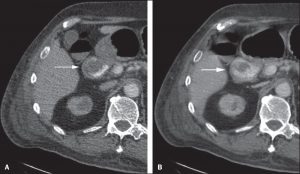
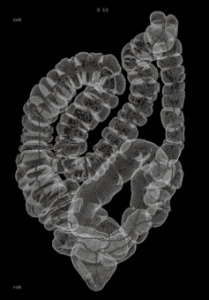
Virtual colonoscopy uses low radiation dose equal to about a year of radiation we all get from environmental sources. Longterm risk of low-dose radiation is unclear. However, the American Association of Physicists in Medicine considers risk from dose levels, such as those used in the virtual exam, to be very small.

In traditional colonoscopy a long tube (colonoscope) is maneuvered from the rectum to the beginning of the colon. There is a small risk of colon perforation from this — approximately 1 patient per 1,000 standard colonoscopies. In virtual colonoscopy, only a very small flexible tip is placed into the rectum to gently inflate the colon. The risk of perforation from the virtual colonoscopy is far lower. Traditional colonoscopy is most often performed with sedation, which carries risk of allergic reaction and other side effects. Virtual colonoscopy does not require sedation. Most patients can go back to their daily activities. Former President Obama had his first colorectal cancer screening using virtual colonoscopy. Unlike standard colonoscopy, the virtual exam can detect unsuspected medical problems outside the colon.
Read More

CORONARY CT ANGIOGRAPHY AND 5-YEAR RISK OF MYOCARDIAL INFARCTION

Nov 15, 2019

BACKGROUND

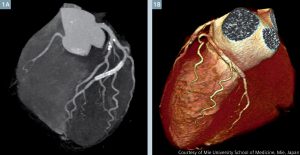
Although coronary computed tomographic angiography (CTA) improves diagnostic certainty in the assessment of patients with stable chest pain, its effect on 5-year clinical outcomes is unknown.

METHODS

In an open-label, multicenter, parallel-group trial, we randomly assigned 4146 patients with stable chest pain who had been referred to a cardiology clinic for evaluation to standard care plus CTA (2073 patients) or to standard care alone (2073 patients). Investigations, treatments, and clinical outcomes were assessed over 3 to 7 years of follow-up. The primary end point was death from coronary heart disease or nonfatal myocardial infarction at 5 years.

Read More

JOURNAL OF CARDIOVASCULAR COMPUTED TOMOGRAPHY

Nov 15, 2019

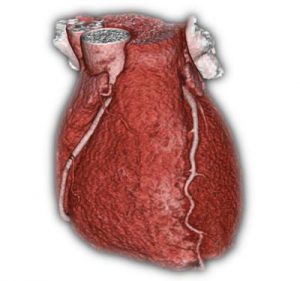
CAD-RADS is a standardized reporting system for coronary CTA results on a per-patient basis. It is intended to improve communication of results to referring physicians in a consistent fashion, including recommendations for further management. The achieved standardization of reporting will benefit education, research, peer review and quality assurance and may ultimately result in improved quality […]

Read More

COMPUTED TOMOGRAPHIC ANGIOGRAPHY CHARACTERISTICS OF ATHEROSCLEROTIC PLAQUES SUBSEQUENTLY RESULTING IN ACUTE CORONARY SYNDROME

Nov 15, 2019

Objectives In a computed tomographic (CT) angiography study, we identified the characteristics of atherosclerotic lesions that were associated with subsequent development of acute coronary syndrome (ACS). Background The CT characteristics of culprit lesions in ACS include positive vessel remodeling (PR) and low-attenuation plaques (LAP). These 2 features have been observed in the lesions that have […]

Read More

CCTA can cut complications and hospital stays

Nov 15, 2019

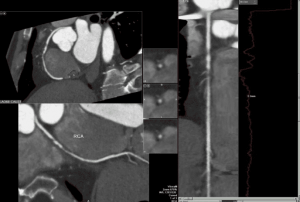
Coronary CT angiography (CCTA) is a safe gatekeeper for cardiac catheterization, reducing the need for intervention, boosting the diagnostic yield of interventions, and trimming minor procedural complications, reported German investigators writing in BMJ.

The study used CCTA to examine more than 300 patients, randomizing them to CT or invasive coronary angiography, and comparing outcomes in terms of procedural complications. They found the use of CCTA cut the need for invasive catheterization from 100% to 14%, and increased the diagnostic yield of invasive angiography (i.e., the number of positive exams), from 15% to 75%, while reducing the number of minor complications from intervention (BMJ, October 24, 2016).

Read More

CASE STUDY: PATIENT 62Y WITH CHEST DISCOMFORT

Nov 15, 2019

CLINICAL HISTORY
Patient 62y with chest discomfort
Family history of coronary artery disease (father died of heart attack at 63y)
CARDIAC CT ANGIOGRAPHY FINDINGS:
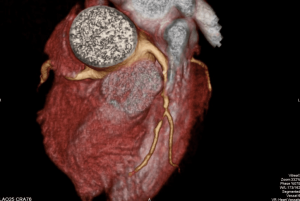
Critical stenosis (90%) proximal LAD artery due to vulnerable non calcified plaque

Read More